
In the vibrant tapestry of global cuisine, few dishes capture the imagination quite like Thai green curry-a harmonious blend of fiery heat, fragrant herbs, and rich coconut milk that dances on the palate. More than just a meal, Thai green curry is a delicious journey through centuries of culinary tradition, embodying the region’s intricate balance of sweet, spicy, sour, and salty flavors. This article invites you to unlock the secrets behind this iconic dish: from its historical roots in the royal kitchens of Thailand to the artful techniques that transform humble ingredients into a symphony of taste. Embark on a flavorful exploration where history meets artistry, and discover why Thai green curry continues to enchant food lovers around the world.
Unlocking Flavors: The Origins and Cultural Meaning of Thai Green Curry
Unlocking flavors of Thai Green Curry reveals a captivating story steeped in centuries of tradition and regional influences. This vibrant dish first emerged in Central Thailand, embracing a symphony of fresh herbs and spices that echo the bounty of tropical landscapes. Known locally as “Gaeng Keow Wan,” its name means “sweet green curry,” a reference not only to its vivid color but also its harmonious balance of heat, sweetness, and aromatic depth. over generations, green curry has evolved from humble street food to a celebrated national treasure, symbolizing Thailand’s ability to blend diverse ingredients with profound culinary artistry.
As a food stylist and culinary creator,experimenting with green curry has always felt like crafting edible poetry-each ingredient adding a brushstroke to a masterpiece. What makes this dish so special is its intricate layering of textures and flavors, from creamy coconut milk to the crisp bite of Thai eggplants, creating an exciting feast for the senses. Weather savored in bustling Bangkok markets or in your own kitchen, green curry invites you to experience Thai culture in every spoonful.
Prep and Cook Time
- Planning: 20 minutes
- Cooking: 30 minutes
- Total Time: 50 minutes
Yield
- Serves 4 people
Difficulty Level
- Medium – requires fresh herbs and a mortar and pestle or food processor for the paste
Ingredients
- For the Green Curry Paste:
- 6 green thai chilies, deseeded for milder heat
- 1 tbsp coriander seeds, toasted
- 1 tbsp cumin seeds, toasted
- 1 tsp white peppercorns
- 4 shallots, peeled and sliced
- 4 cloves garlic, peeled
- 1 stalk lemongrass, white part only, finely chopped
- 1-inch piece galangal, sliced
- 1-inch piece fresh turmeric, peeled and chopped (or 1 tsp ground turmeric)
- 1 tbsp shrimp paste (or substitute with miso for vegetarian version)
- 1 cup fresh cilantro leaves and stems
- For the Curry:
- 2 tbsp vegetable oil
- 1 lb boneless chicken thighs, sliced
- 2 cups coconut milk (full fat for creaminess)
- 1 cup Thai eggplants, quartered
- 1 red bell pepper, thinly sliced
- 1 cup bamboo shoots, drained
- 3 kaffir lime leaves, torn into pieces
- 1 tbsp palm sugar (or brown sugar)
- 2 tbsp fish sauce (or soy sauce for vegetarian)
- Fresh Thai basil leaves, for garnish
- Steamed jasmine rice, to serve
Instructions
- Prepare the green curry paste: Using a dry skillet, toast the coriander seeds, cumin seeds, and white peppercorns until aromatic, about 2 minutes. grind them to a fine powder using a mortar and pestle.
- Add the green chilies, shallots, garlic, lemongrass, galangal, turmeric, and shrimp paste to the mortar. pound all ingredients together until a smooth, fragrant paste forms. Alternatively, pulse in a food processor with a splash of water to assist blending.
- Sauté the curry paste: Heat oil in a large pan over medium heat.Add 2-3 tablespoons of the freshly made green curry paste and sauté until golden and fragrant, about 5 minutes, stirring constantly to prevent sticking.
- Add the sliced chicken thighs to the pan,stirring to coat with the curry paste. Cook until the chicken starts to brown, about 5 minutes.
- Pour in the coconut milk and bring to a gentle simmer.
- Add the quartered Thai eggplants, red bell pepper slices, bamboo shoots, and torn kaffir lime leaves. Stir well and cook for 10-12 minutes until the vegetables are tender and the chicken is cooked through.
- Season with palm sugar and fish sauce, tasting and adjusting for a perfect balance of sweet, salty, and spicy flavors.
- Remove from heat and fold in fresh thai basil leaves.
- Serve hot with steamed jasmine rice and garnish with additional basil or sliced fresh chili if desired.
Tips for Success
- Customize the heat: Adjust green chili quantity to suit your spice tolerance.Removing seeds reduces intensity without sacrificing flavor.
- Make ahead: Green curry paste freezes beautifully. Prepare a large batch and freeze in ice cube trays for speedy portions.
- Vegetarian variations: Replace chicken with tofu and swap fish sauce with soy sauce or tamari.
- Fresh herbs matter: Use fresh cilantro stems in the paste and Thai basil in the curry for authentic aroma.
- Consistency check: If the curry is too thick, add a splash of coconut water or stock to loosen.
Serving Suggestions
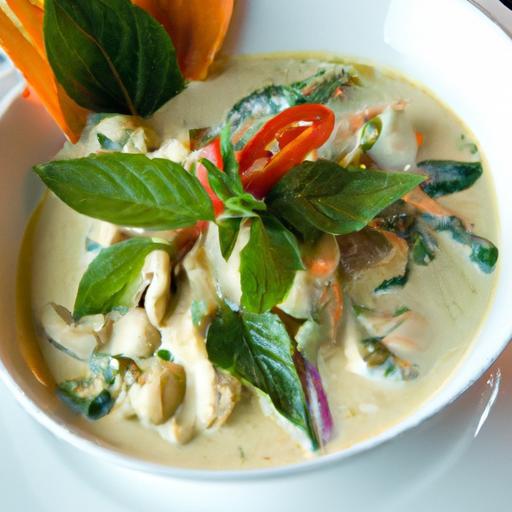
Present the Thai green curry in a deep bowl to capture its luscious texture. Garnish with vibrant Thai basil leaves and optional thinly sliced red chilies for color contrast. On the side,offer fragrant steamed jasmine rice or sticky rice for an authentic experience. Complement the meal with light appetizers like fresh spring rolls or a crisp green papaya salad to balance the rich curry. A chilled glass of Thai iced tea or a subtly sweet Riesling pairs beautifully to soothe the palate.
| Nutrient | Per Serving |
|---|---|
| Calories | 420 kcal |
| Protein | 28 g |
| carbohydrates | 12 g |
| Fat | 28 g |
For a deeper dive into fragrant Thai cooking techniques, explore our related article on Thai Herbs and Spices: A Flavor Profile. To enrich your understanding of Southeast Asian cuisine, visit the SBS Food’s feature on Thai Green Curry.

Q&A
Q&A: Unlocking Flavors – The Art and history of Thai Green Curry
Q1: What makes Thai green curry distinct from other curries?
A1: Thai green curry is a vibrant symphony of flavors, known for its striking green hue derived from fresh green chilies and herbs. Unlike heavier, richer curries, it balances creamy coconut milk with sharp, aromatic spices like galangal, lemongrass, and kaffir lime leaves. This creates a lively, slightly sweet yet spicy profile that dances on the palate.
Q2: where did thai green curry originate?
A2: The roots of thai green curry trace back to central Thailand, where royal kitchens first crafted this elegant dish. It emerged as an evolution of customary Thai cooking methods combined with the abundant tropical ingredients available locally-particularly fresh herbs and coconut milk, staples that lend the curry its characteristic freshness and creaminess.Q3: How has the recipe evolved over time?
A3: Traditionally, green curry relied heavily on pounding fresh ingredients into a fragrant paste using a mortar and pestle-a labor of love ensuring maximum flavor extraction. Over time, modern adaptations include using spice blends or pre-made pastes, but authentic green curry still prioritizes fresh, vibrant components. Additionally, regional variations introduce unique twists, like different protein choices or added vegetables.
Q4: What are the essential ingredients in authentic Thai green curry?
A4: The heart of green curry lies in its green curry paste: fresh green chilies, garlic, shallots, galangal, lemongrass, coriander root, kaffir lime zest, and shrimp paste. Combined with creamy coconut milk, palm sugar, fish sauce, and fresh Thai basil, these ingredients create layers of complexity-spicy, sweet, savory, and aromatic all at once.
Q5: Why is green curry considered an art form in Thai cuisine?
A5: Crafting a perfect green curry is akin to painting with flavors; it requires balance, timing, and intuition. The cook must temper the heat of chilies, adjust the sweetness and saltiness, and simmer just enough for ingredients to meld without losing brightness. This mindful process reflects the artistry and tradition embedded in thai culinary culture, where every ingredient plays its part harmoniously.Q6: How can home cooks capture the essence of thai green curry?
A6: To unlock the authentic essence, start with fresh ingredients, especially the green chilies and herbs. Invest time in making or sourcing quality green curry paste. Respect the cooking sequence-sauté the paste before adding coconut milk to unlock its aromas, then simmer gently. don’t rush; let the curry rest briefly off heat to marry flavors deeply. Embracing patience and freshness transforms a simple meal into a cultural experience.
Q7: what cultural significance does green curry hold in Thailand today?
A7: Beyond its delicious taste, Thai green curry represents a bridging of tradition and everyday life. It is indeed loved both in humble street stalls and royal banquets, symbolizing Thai hospitality, ingenuity, and respect for nature’s bounty. Its enduring popularity showcases how culinary artistry remains a vibrant thread in Thailand’s cultural fabric.
Q8: Can green curry be adapted for different dietary preferences?
A8: absolutely! While traditionally made with chicken or beef,green curry adapts beautifully to tofu,seafood,or vegetables,making it versatile for vegetarians and vegans (with fish sauce substitutions). the key is maintaining the balance of flavors – spicy, sweet, and savory – to keep that unmistakable green curry character alive.
Unlocking the secrets of Thai green curry reveals more than a recipe-it opens a window into a rich cultural heritage where art,history,and flavor blend in perfect harmony. Whether a fiery feast or a gentle indulgence, green curry invites every palate to savor its story.
In Retrospect
As the vibrant hues of Thai green curry continue to captivate palates around the world, understanding its rich history and delicate artistry deepens our gratitude for this culinary masterpiece. More than just a dish, green curry is a flavorful bridge connecting tradition with innovation, a testament to Thailand’s cultural tapestry and the skillful hands that craft it. whether you’re savoring its spicy, creamy notes at a bustling street market or recreating it in your own kitchen, unlocking the secrets behind green curry allows you to taste not just a meal, but a story steeped in heritage and passion. So next time the aroma of lemongrass and kaffir lime leaves fills the air, remember-you’re experiencing a vibrant symphony of flavors centuries in the making.