
In the heart of Mexico’s rich culinary tapestry lies Pozole Verde, a vibrant green stew that awakens the senses and tells a story as colorful as its flavors. More than just a meal, this customary dish embodies the spirit of communal gatherings, heritage, and the ingenious use of native ingredients. From its tender hominy kernels to the aromatic blend of herbs and chilies that give it its signature hue, Pozole Verde invites food lovers on a journey through Mexico’s verdant landscapes and time-honored kitchens. In this article, we’ll unravel the origins, ingredients, and cultural significance of this beloved stew-delving into what makes Pozole Verde not only a feast for the palate but a party of Mexican identity.
Pozole Verde is a beloved Mexican dish steeped in rich cultural heritage, its vibrant green hue inviting you into a world of fresh, bold flavors that celebrate the bounty of regional ingredients. Originating from the central-west states of Mexico,especially Michoacán and Guerrero,this green hominy stew carries the legacy of indigenous culinary traditions mixed with Spanish influences. Each bowl tells a story of community gatherings, festive occasions, and family tables, where the warmth of the broth is as comforting as the memories made around it.
Prep and Cook Time
- Planning: 30 minutes
- Cooking: 2 hours
- Total time: 2 hours 30 minutes
Yield
serves 6 hearty portions
Difficulty Level
Medium – Perfect for adventurous cooks ready to embrace authentic Mexican flavors
Key Ingredients That Bring Pozole Verde to Life
- 2 ½ lbs pork shoulder or pork butt, cut into large chunks (you can use chicken thighs for a lighter option)
- 1 large can (29 oz) white hominy, drained and rinsed
- 5 tomatillos, husked and rinsed, giving that signature tangy brightness
- 2 poblano peppers, charred and peeled for smoky depth
- 1 bunch fresh cilantro, stems and leaves separated
- 1 medium white onion, quartered
- 4 cloves garlic, minced
- 2 jalapeños, stemmed and seeded (adjust for heat preference)
- 1 tsp dried oregano, preferably Mexican oregano
- 1 tsp ground cumin
- Salt and pepper, to taste
- Optional garnishes: shredded cabbage, radish slices, lime wedges, avocado, chopped onion, dried oregano, and tostadas or corn chips
Step-by-Step Guide to Crafting the Perfect Green hominy Stew
- Prepare the broth: In a large heavy-bottom pot, place the pork chunks along with the quartered onion, 2 garlic cloves, salt, and enough water to cover (about 10 cups). Bring to a boil over medium-high heat, then reduce to a gentle simmer. Skim off any foam that rises to keep the broth clear. Simmer for about 1½ to 2 hours until the pork is tender.
- Make the verde sauce: While the pork simmers, char the poblano peppers on an open flame or broiler until the skin blisters. Place in a sealed plastic bag to steam for 10 minutes,then peel off skins and remove seeds.
- Blend the sauce: In a blender, combine the tomatillos, peeled poblanos, cilantro stems, jalapeños, remaining garlic, cumin, oregano, and a pinch of salt with 1 cup of the pork broth. Blend until smooth and vibrant green.
- Strain and simmer: Pour the green sauce through a fine sieve into the pot with the cooked pork. Stir in the hominy, adjust seasoning with salt and pepper, and simmer together gently for 30 minutes to meld the flavors.
- Prepare the toppings: While the stew finishes cooking, chop fresh cilantro leaves, slice radishes thinly, shred cabbage finely, and cut lime wedges. these add brightness and crunch to every spoonful.
- Serve: Ladle the pozole verde into bowls,and offer generous helpings of garnishes to customize each serving.
Chef’s Notes and Tips for Success
- Hominy tip: Use canned hominy for convenience, but rinse well to reduce excess salt and cloudiness in the broth.
- Flavor depth: For an even richer stew, add a pork bone or neck during the simmer.
- Heat control: Adjust jalapeños and poblano seeds according to your spice preference.
- Make-ahead: Pozole verde tastes even better the next day as flavors develop. Refrigerate and gently reheat, adding a splash of broth if needed.
- Vegetarian variation: Substitute vegetable broth and omit pork, adding extra hominy and roasted vegetables to maintain body and texture.
- Broth clarity: Skimming fat and foam early ensures a beautiful, clean broth.
Serving suggestions and Pairings to Elevate Your Pozole Experiance
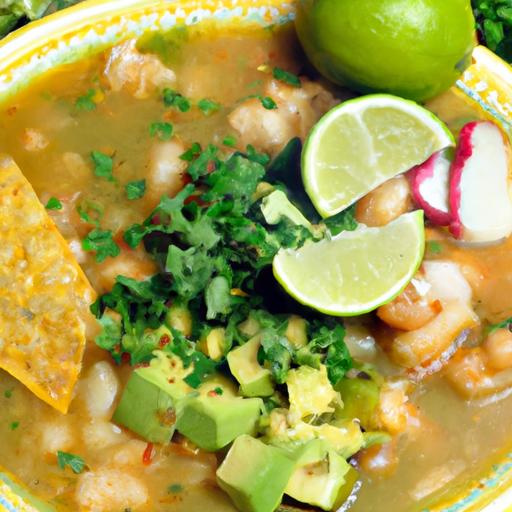
Presenting your pozole verde with vibrant accompaniments enhances the experience.A bowl topped with crisp shredded cabbage, bright radish slices, and a few dashes of dried oregano creates beautiful color contrast and texture.Fresh lime wedges provide tang and balance the richness. Creamy avocado slices add a luscious touch, while chopped white onion and fresh cilantro brighten every mouthful.
Traditionally paired with crunchy tostadas or warm corn tortillas,offering these allows guests to scoop or alternate bites.For beverages, a refreshing agua fresca such as horchata, tamarind, or jamaica perfectly complements the herbal and smoky notes of the stew. For those who enjoy a spirited pairing, a cold Mexican lager or mezcal accentuates the dish’s depth.
| Nutrient | Per Serving |
|---|---|
| Calories | 420 |
| Protein | 32g |
| Carbohydrates | 35g |
| Fat | 12g |

Discover more about authentic Mexican flavors in our Mexican Salsas Guide. For further reading on traditional Mexican hominy dishes, check out National Geographic’s feature on pozole.
Q&A
Q&A: Pozole Verde – Mexico’s Vibrant Green Hominy Stew Explained
Q1: What is Pozole Verde?
A1: Pozole Verde is a traditional mexican stew characterized by its vivid green color, rich flavors, and comforting warmth. at its heart, it’s a savory broth brimming with hominy (hulled corn kernels), tender pork or chicken, and a blend of fresh green ingredients like tomatillos, green chilies, cilantro, and herbs that give it its signature hue and brightness. it’s like a vibrant green hug in a bowl!
Q2: How does Pozole Verde differ from other types of pozole?
A2: Pozole comes in several regional varieties-red (rojo), white (blanco), and green (verde). While red pozole uses dried red chilies to create a deep, smoky flavor and white pozole is more minimalist, green pozole shines with its fresh, zesty profile thanks to ingredients like tomatillos, jalapeños, epazote, and sometimes spinach or cilantro. the verde version offers a lighter, herbal twist that feels refreshing yet hearty.
Q3: What is hominy and why is it critically important in pozole?
A3: Hominy is dried corn kernels that have been treated through nixtamalization-the process of soaking corn in an alkaline solution, usually limewater. This transforms the kernels into puffy, chewy morsels with a unique texture and flavor, essential to pozole. Hominy is the heart and soul of pozole as it adds substance, traditional character, and that satisfying bite that anchors the stew.
Q4: what ingredients give Pozole Verde its distinctive green color?
A4: The green magic comes from fresh, vibrant ingredients: tomatillos provide a tangy base, while green chilies such as jalapeños or serranos add a mild heat. Fresh herbs like cilantro and epazote contribute thier aromatic punch,and sometimes even spinach or parsley enhances the verdant palette. All these blend harmoniously,creating that unmistakable emerald broth.
Q5: Is Pozole Verde spicy?
A5: The heat level can vary depending on the cook and choice of chilies. Traditionally, it balances mild to moderate spiciness-the tomatillos and herbs lend brightness, while the green chilies give a gentle kick without overwhelming the palate. Extra heat can always be added at the table with salsa, sliced radishes, or fresh jalapeños.
Q6: How is Pozole Verde traditionally served?
A6: Pozole Verde is frequently enough ladled into bowls and topped with a beautiful array of garnishes: shredded cabbage or lettuce for crunch, thinly sliced radishes, diced onions, fresh avocado slices, lime wedges, and oregano or additional cilantro.Warm tostadas or tortillas typically accompany the dish, perfect for scooping or dipping. It’s a feast for the senses and a social meal inviting sharing.
Q7: What occasions is Pozole Verde typically enjoyed on?
A7: Pozole is deeply embedded in Mexican culture, commonly served during celebrations, family gatherings, and festivities like Mexican Independence Day or Christmas.Pozole Verde, with its fresh and lively flavors, is a favorite in the warmer months or whenever a comforting yet bright meal is desired. Its communal nature makes it perfect for bringing people together.
Q8: Can Pozole Verde be made vegetarian or vegan?
A8: Absolutely! While traditional pozole verde frequently enough features pork or chicken, it’s easy to create a plant-based version by using vegetable broth and adding hearty vegetables like mushrooms, zucchini, or squash. The hominy and vibrant green sauce remain the stars, delivering the classic flavors without animal products.
Q9: What makes Pozole Verde a must-try dish for anyone exploring Mexican cuisine?
A9: Pozole verde encapsulates Mexico’s culinary brilliance-turning humble ingredients into a dish that is vibrant in color, complex in flavor, and rich in tradition. It offers a unique taste experience, showcasing the bright, fresh side of Mexican cooking, alongside the comfort and history that make it truly unforgettable. Trying it is indeed like taking a delicious journey into mexico’s heart and soul.
Q10: Where can I find authentic Pozole Verde outside of Mexico?
A10: Authentic pozole verde can often be found in Mexican restaurants specializing in regional cuisine, especially those focusing on central and southern mexican dishes. Farmers markets with Mexican vendors or pop-up events celebrating Mexican heritage may also offer this stew. Alternatively, making it at home with fresh ingredients can be a rewarding culinary adventure!
to sum up
As the final spoonful of pozole verde lingers on the palate, it’s clear that this vibrant green stew is much more than just a meal-it’s a rich tapestry of Mexican culture, history, and flavor. From the bright blend of tomatillos and herbs to the hearty hominy and tender meat, every ingredient tells a story rooted deeply in tradition yet embraced in contemporary kitchens. Whether enjoyed during festive gatherings or a comforting family dinner, pozole verde invites us to savor the past while celebrating the colors and tastes that continue to define Mexico’s culinary identity. So next time you seek a dish that’s both nourishing and bursting with heritage,let pozole verde be your delicious guide into the heart of Mexico’s vibrant food culture.