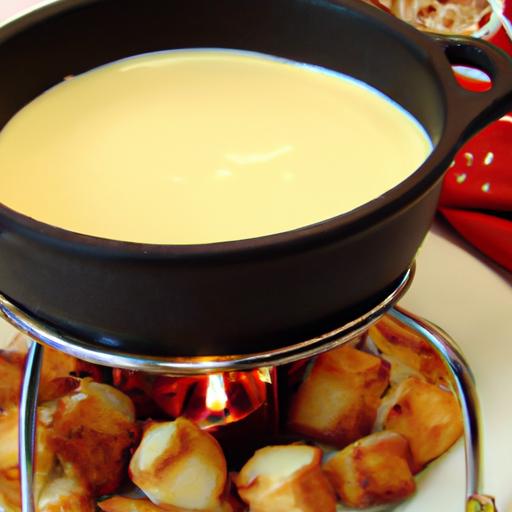

There’s something undeniably enchanting about cheese fondue-a bubbling cauldron of melted gold inviting friends and family to gather round, forks in hand, ready to dip crusty bread, crisp vegetables, or savory morsels into its creamy depths. Far beyond a simple dish, cheese fondue is a culinary tradition steeped in history, culture, and a touch of alchemy. From the rustic Alpine slopes where shepherds first devised this hearty meal to the elegant dining tables of modern cities, the art of melting cheese has evolved into a symbol of warmth, conviviality, and indulgence. In this article, we embark on a flavorful journey thru the origins, techniques, and enduring appeal of cheese fondue-a delightful fusion of science, heritage, and pure, melted magic.
Melting Magic: The Art and History of Cheese Fondue Delight
Cheese fondue, a dish steeped in rich tradition and communal warmth, invites you into a world where melty, molten cheeses unite diverse cultures through a shared love of comfort food. Melting Magic: The Art and History of Cheese Fondue Delight takes you on a journey from the Swiss Alps to inventive global variations, guiding you through selecting the perfect cheeses, mastering the melt, and elevating your fondue soirée with inspired pairings.
prep and Cook Time
- Preparation: 15 minutes
- Cooking: 10 minutes
- Total Time: 25 minutes
Yield
Serves 4 comfortably as a main or shared appetizer
difficulty Level
Medium – perfect for home cooks ready to experiment with technique and flavors
Ingredients
- 1 cup dry white wine (such as sauvignon Blanc or Grüner Veltliner)
- 2 cloves garlic, halved
- 1 tablespoon lemon juice, freshly squeezed
- 8 ounces Gruyère cheese, shredded
- 8 ounces Emmental cheese, shredded
- 1 tablespoon cornstarch or all-purpose flour
- 2 tablespoons kirsch (cherry brandy), optional but traditional
- Freshly ground black pepper, to taste
- Nutmeg, a pinch, freshly grated
Instructions
- rub the inside of your fondue pot or heavy-bottomed saucepan with the cut sides of the halved garlic cloves to infuse subtle aroma.
- Pour the white wine and lemon juice into the pot and warm gently over medium heat until steaming but not boiling, about 3-4 minutes.
- In a large bowl, toss the shredded Gruyère and Emmental cheeses with the cornstarch to coat evenly. This step is crucial for preventing clumps and ensuring a smooth melt.
- Gradually add the cheese mixture to the warm wine, stirring constantly in a gentle “figure-eight” motion with a wooden spoon or silicone spatula. This slow incorporation fosters a silky texture without separation.
- Once fully melted and smooth, stir in the kirsch, black pepper, and freshly grated nutmeg. Adjust seasoning to your preference.
- Keep warm over low heat or a fondue burner,stirring occasionally to maintain that luscious,velvety consistency.
Chef’s Notes: Tips for Success
- Cheese selection: Using a blend of Gruyère and Emmental offers a perfect balance of nuttiness and meltability. Experiment with adding Comté or Appenzeller for unique depth.
- Wine matters: Choose a dry white with good acidity to cut the richness and help the cheese melt without clumping.
- Don’t rush the melt: High heat can cause the cheese to seize or separate. Patience with gentle heat is key to silky perfection.
- Kirsch: Adds authenticity and a subtle cherry note but can be omitted if preferred.
- Make-ahead option: Prepare the cheese mix and store refrigerated. Warm gently with wine before serving.
Creative Pairings and Serving Suggestions to Elevate Your Fondue Experience
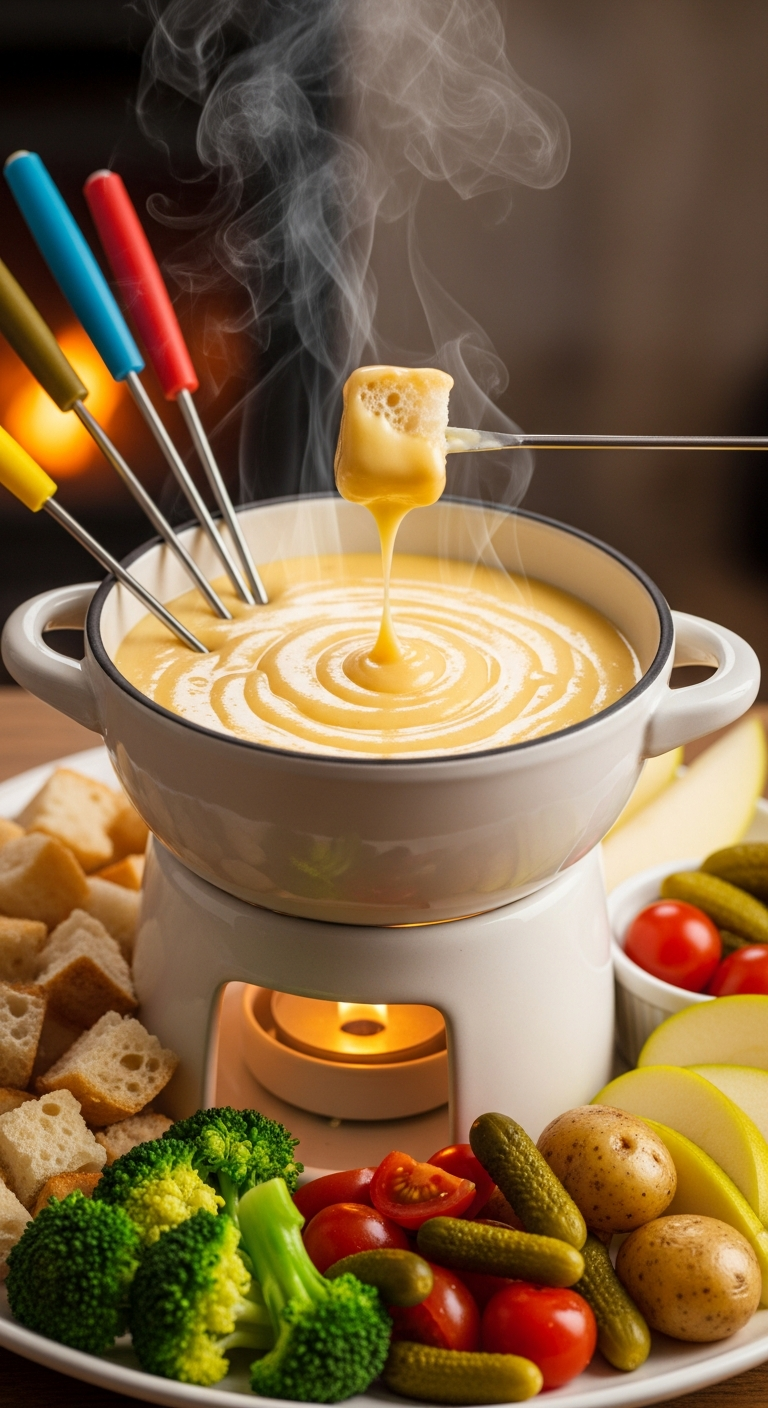
Present your cheese fondue with an array of texture-rich dippers to create a visually stunning and flavorfully balanced board.Traditional crusty baguette cubes are a must, but consider including:
- Roasted baby potatoes – their fluffy interiors soak up the cheese beautifully.
- Steamed broccoli and cauliflower florets – for bursts of fresh, earthy flavor.
- Pickled vegetables such as gherkins or pearl onions – their tart brightness enhances the richness.
- Thin slices of apple or pear – offering a delicate sweetness and crisp contrast.
- Charcuterie slices like prosciutto or smoked sausage – a savory complement.
Garnish with freshly chopped parsley or chives for vibrant color and subtle herbal notes. Serve with a crisp white wine or a refreshing cider to complete the sensory symphony.
| Nutrient | Per Serving |
|---|---|
| Calories | 360 kcal |
| Protein | 20 g |
| Carbohydrates | 10 g |
| Fat | 28 g |
Explore more about the heritage of swiss cuisine in our Swiss cuisine traditions, or deepen your culinary knowledge on cheese varieties with Cheese.com.

Q&A
Q&A: Melting Magic – The Art and History of Cheese Fondue Delight
Q1: What exactly is cheese fondue?
A1: Cheese fondue is a luscious, velvety blend of melted cheeses, often combined with white wine and a hint of garlic, served warm in a communal pot. Diners dip cubes of crusty bread-or sometimes veggies and meats-into the molten cheese, making every bite a gooey masterpiece of flavor and conviviality.
Q2: Where did cheese fondue originate?
A2: The roots of cheese fondue trace back to the Swiss Alps, where shepherds and villagers crafted this hearty dish as a way to use aged cheese and hard bread during the long winters. It was a practical, warming meal that later evolved into a beloved symbol of Swiss culinary culture and communal dining.
Q3: Why is fondue considered more than just a meal?
A3: Fondue transcends mere sustenance-it’s a social ritual. Sharing a single pot encourages conversation, cooperation, and connection. The very act of dipping and savoring together transforms a meal into a shared experience, a melting pot of flavors and friendships.
Q4: What types of cheese are traditionally used in fondue?
A4: Classic fondue recipes often highlight Swiss cheeses such as Gruyère and Emmental. These varieties melt beautifully, yielding a smooth, elastic texture and a rich, nutty flavor. Other regional cheeses can add unique twists, but the balance of taste and melt is key.
Q5: How do wine and kirsch (cherry brandy) enhance fondue?
A5: White wine adds acidity and depth, preventing the cheese from becoming rubbery while enlivening the palate. Kirsch, a splash of cherry brandy, introduces subtle fruity warmth that balances the richness and adds complexity to each bite.Together, they elevate fondue from comfort food to culinary artistry.
Q6: Can fondue be made with non-cheese ingredients?
A6: Absolutely! Though cheese fondue reigns supreme, the fondue family includes chocolate, broth, and oil variations. Each offers a different dipping adventure-from sweet, silky chocolate fondue perfect for fruit to savory oil fondues ideal for cooking tender meats tableside.
Q7: How can one master the perfect cheese fondue at home?
A7: Mastery begins with quality ingredients, patience, and technique. Grate cheese finely, warm the wine gently before adding cheese, and stir patiently in a figure-eight motion to encourage smooth melting. Avoid rushing the heat to prevent curdling, and finish with a dash of cornstarch slurry for extra silkiness.Q8: What cultural meaning does fondue hold today?
A8: Fondue remains a festive emblem of togetherness across Switzerland and beyond.It graces holiday tables, winter gatherings, and cozy nights alike, symbolizing warmth, sharing, and the joy of melting boundaries-both culinary and social.
Q9: Are there modern twists on the traditional cheese fondue?
A9: indeed! Creative chefs experiment by infusing cheeses with herbs,spices,or even smoky flavors. Alternative dippers like roasted potatoes, pickles, or artisanal breads add new dimensions. Vegan and gluten-free variants also expand fondue’s inclusive magic to diverse palates.
Q10: Why does fondue continue to captivate food lovers worldwide?
A10: Fondue’s enchantment lies in its simplicity and soulfulness-a dish that invites participation, sparks nostalgia, and delivers comforting, indulgent flavors in every dip.It’s both a culinary craft and a party of togetherness, melting hearts as much as cheese.
Key Takeaways
From the hearths of alpine cottages to the sleek tables of modern bistros, cheese fondue remains a captivating culinary tradition that transcends time and borders. Its rich, gooey embrace tells a story of communal warmth, regional pride, and the alchemy of simple ingredients transformed into molten magic. Whether savored as a cozy winter indulgence or a festive centerpiece,fondue invites us not only to taste history but to share in a timeless ritual of togetherness. So next time you dip a crusty bread or crisp vegetable into that velvety pot of melted wonder, remember: you’re partaking in an art form that has delighted palates and kindled friendships for centuries.